Crushing COVID: Returning to Training After COVID-19
Abstract: During the pandemic some athletes have had to manage returning to training after a COVID-19 infection. Using an athlete case study, we outline the training process involved with an amateur athlete returning to training post COVID-19. Lessons can be learned from this experience that you can apply to your own training.
Keywords: COVID-19, return to training, cycling, programming
It had just past the stroke of midnight on January 2nd for Athletes Xcel athlete and cyclist Kevin. Receiving the news of a positive COVID-19 test after being notified of a close contact to a positive case. “It felt surreal at that moment”, Kevin describes. Unfortunately, this story is all too familiar as the pandemic continues to overwhelm health systems. Following notification, Kevin’s health status was monitored during a 2-week isolation period. Thankfully, Kevin had no severe health consequences during the 2-week quarantine. This was followed up by a physical examination and assessment on readiness to return to work. All completed by qualified medical professionals.
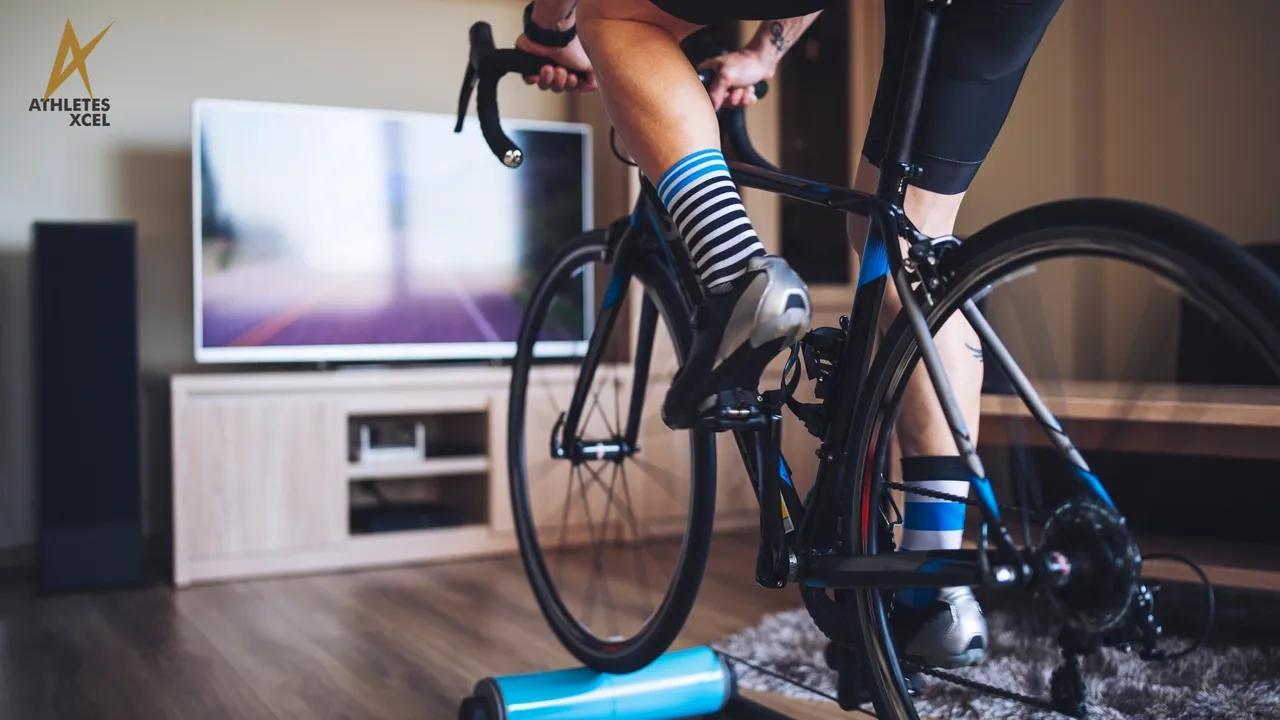
Off sick from his full-time job for 4-weeks. The virus itself took a large toll on Kevin’s physical state resulting in significant detraining. Once cleared to begin regular exercise by the medical team, Kevin mentioned, “my biggest concern was not knowing how my body would react to the training”. The first couple of training weeks focused on increasing stamina for daily life activities. In this period Kevin gradually returned to his full-time job which is an active profession. After one full work week, Kevin added light exercise (e.g., cycling, stretching) into his schedule. A key component during the early stages of returning to training was getting back into normal daily life, nutrition, and sleep routines before beginning physical training. Without nailing down these key components, you are setting yourself up for failure as recovery is fundamental for constant training progress.
It can not be ignored that a full-time work week places a load onto the body that cannot be forgotten. For Kevin this was an important consideration. At first, the work week was an adequate amount of activity for Kevin’s body to tolerate, linked to being in a highly detrained physical state. It can be tempting after getting medical clearance to go from having not trained for weeks, straight to a full training week without consideration of being physically detrained. Those who use this approach have the best intentions of trying to catch up for lost training time. Approaching training this way will often lead to delaying the time its takes to fully recover or worse, increases the risk of injury / illness. Kevin overcame his initial concerns of returning to training “by being patient and taking a slow, gradual approach returning to training by listening to my body”.
Kevin’s first objective was to regain his physical capacity to pre-COVID levels. As the COVID-19 virus effects the respiratory and cardiovascular systems, training needed to focus on enhancing both systems. A large amount of training time was placed on developing aerobic endurance and pedaling efficiency using low-intensity cycling. Kevin explained, “I was surprised to see that my zone one rides (<140W) had my heart rate up in the low to mid 150bpm’s. It made me nervous but reminded myself that all the tests I had taken up until that point (ECG/Chest X-rays) showed that everything was normal”.
Influenced by Kevin’s long-term goals of returning to criterium and track cycling racing, intensity was not absent from Kevin’s training. Intensity was achieved by using strength training, extensive aerobic intervals, and leg speed sprint training. Due to being in a detrained state the intensity prescribed began at sub-maximal levels. Over the course of 16-weeks training, the training volume gradually increased. After the first 8 weeks the volume began to reduce. This 8-week mark was followed by increasing the intensity by shifting towards more anaerobic development. Linked to greater strength levels developed in the gym during the first 8 weeks which gave Kevin an adequate strength base to produce the high power needed for anaerobic based efforts. Over the 16-weeks of training, a major principle was finding training balance. This was achieved by setting a constant weekly training schedule with set session frequency over the 16-weeks. Additionally, correctly managing intensity and volume to find the training-load sweet spot on a regular basis.
Kevin mentioned, “the torque intervals that were prescribed made me nervous as I knew it was geared toward hitting my zone 4 heart rate zones”. Over the 16 weeks, Kevin pushed and listened to his body. Kevin recalled, “I remember when I was able to hit the zones, although extremely fatigued after, I felt very accomplished”. Comparisons were made with training outcomes pre-COVID-19 and after the 16-weeks of training post COVID-19 infection. Kevin increased his 1-second sprint peak power (+18%), 15-second sprint average power (+31%), sprint 60-second average power (+4%) and 20-minute average power (+11%). Kevin clearly exceeded his expectations of returning to pre-COVID-19 infection physical levels.
One of lessons Kevin learned was to “be patient and trust the process of the training program set out”. Its easy to get excited when training is going well by adding in extra high intensity-based sessions. What is often ignored is the time these extra intense sessions eat into your scheduled recovery and rest. This can delay regeneration for key sessions targeted in a week. Over time this can stall training progress and/or decrease performance.
We are beyond excited by the progress Kevin has made in a short space of time and given the circumstances. Factors of Kevin’s performance increases were due to correctly planning training-load (volume, intensity, and frequency), balancing exercise stimulus, and not ignoring the importance of recovery (rest, sleep, and nutrition). Not ignoring Kevin’s effort and dedication to his training that also led to performance increases. Kevin is now looking forward for the velodrome to reopen and for road / track racing to return. We can not wait to see Kevin put his new physical engine to the test.
Thank you to Kevin for allowing us to share your journey, we appreciate your insights.